Radioligand Therapy
Radiation delivered by a targeting molecule
Radioligand therapy combines a molecule that recognizes a biological target with a therapeutic radionuclide that deposits radiation in the targeted tissue.
uTREAT®
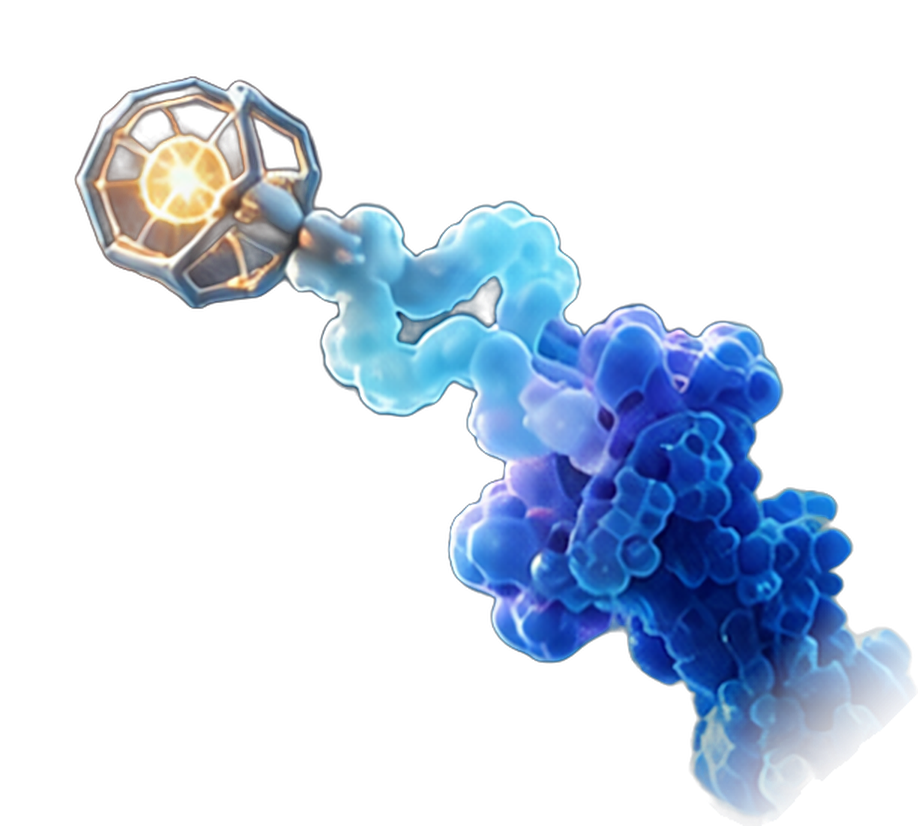
Curasight is developing radiopharmaceutical product candidates within the uTREAT® platform for uPAR-targeted therapeutic development.
In glioblastoma, the current human study uses 64Cu-DOTA-AE105 at imaging and dosimetry activity to characterize delivery and radiation exposure before therapeutic dosing is introduced with a separate 177Lu product candidate. Copper-64 has theranostic decay characteristics, including positron emission for PET imaging and beta-minus and Auger-electron emissions with therapeutic potential.
Separately, a next-generation uPAR ligand is being advanced within uTREAT® with modular capability for distinct radionuclide-specific alpha- or beta-emitting products.
Payload
Beta emitters can provide a cross-fire effect over a longer tissue range (>1 mm), while alpha emitters deliver high-energy radiation over a shorter range (5-10 cells).
Beta emitters
Cross-fire effect
Longer tissue range (>1 mm)
Alpha emitters
High-energy radiation
Shorter range (5-10 cells)
The optimal radionuclide payload depends on factors such as target density level (high vs low) and distribution (homogenous vs. heterogenous), pharmacokinetics and normal-organ exposure.
Curasight therefore treats radionuclide selection as an indication-specific development decision rather than a one-radioisotope-fits-all choice.